Environmental Science
-
College
-
Hours Required
120 credit hours -
Minors Available
Applied Climate Science, Environmental Science, Remote Sensing in Agriculture and Natural Resources, Soil Science, Water Science
-
Areas of Focus
Climate Science, Soil Science, Spatial Science, Water Science
The Nebraska Difference
Individualized Advising
Get 1-to-1 guidance from a dedicated academic advisor.
Outside the Classroom
Build practical skills close to home or through global hands-on experiences.
Build Your Network
Connect with faculty and alumni who open career pathways early.
Research Opportunities
Tackle real-world questions through community-based research opportunities.
Program Features
Explore Options Within the Major
Choose an emphasis area (option) to guide your studies in climate, soil, water or spatial science. With a degree in Environmental Science, you can pursue careers as a geologist, water scientist, soil conservationist, climate educator, technology specialist and more.
Gain Practical Experience
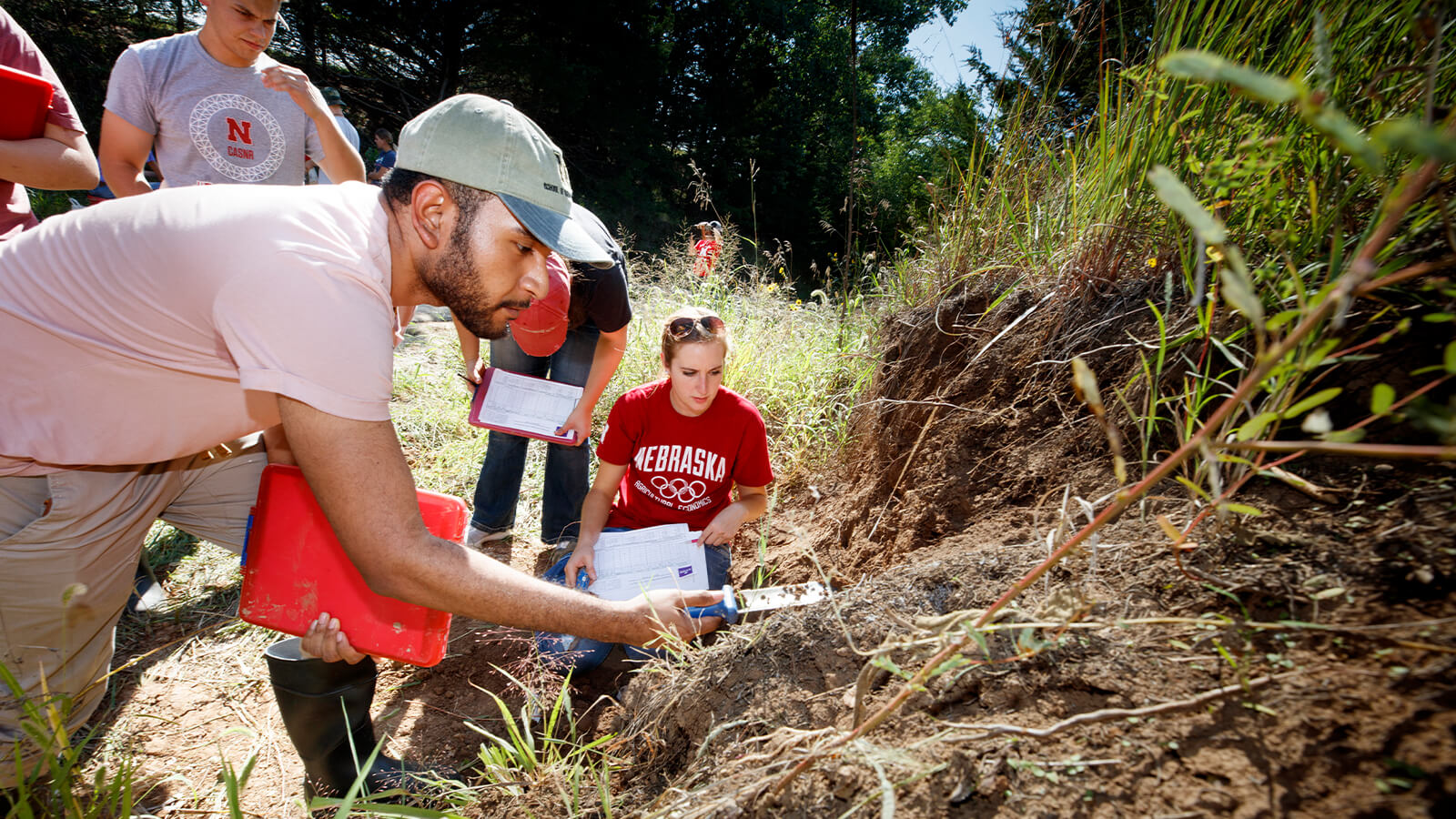
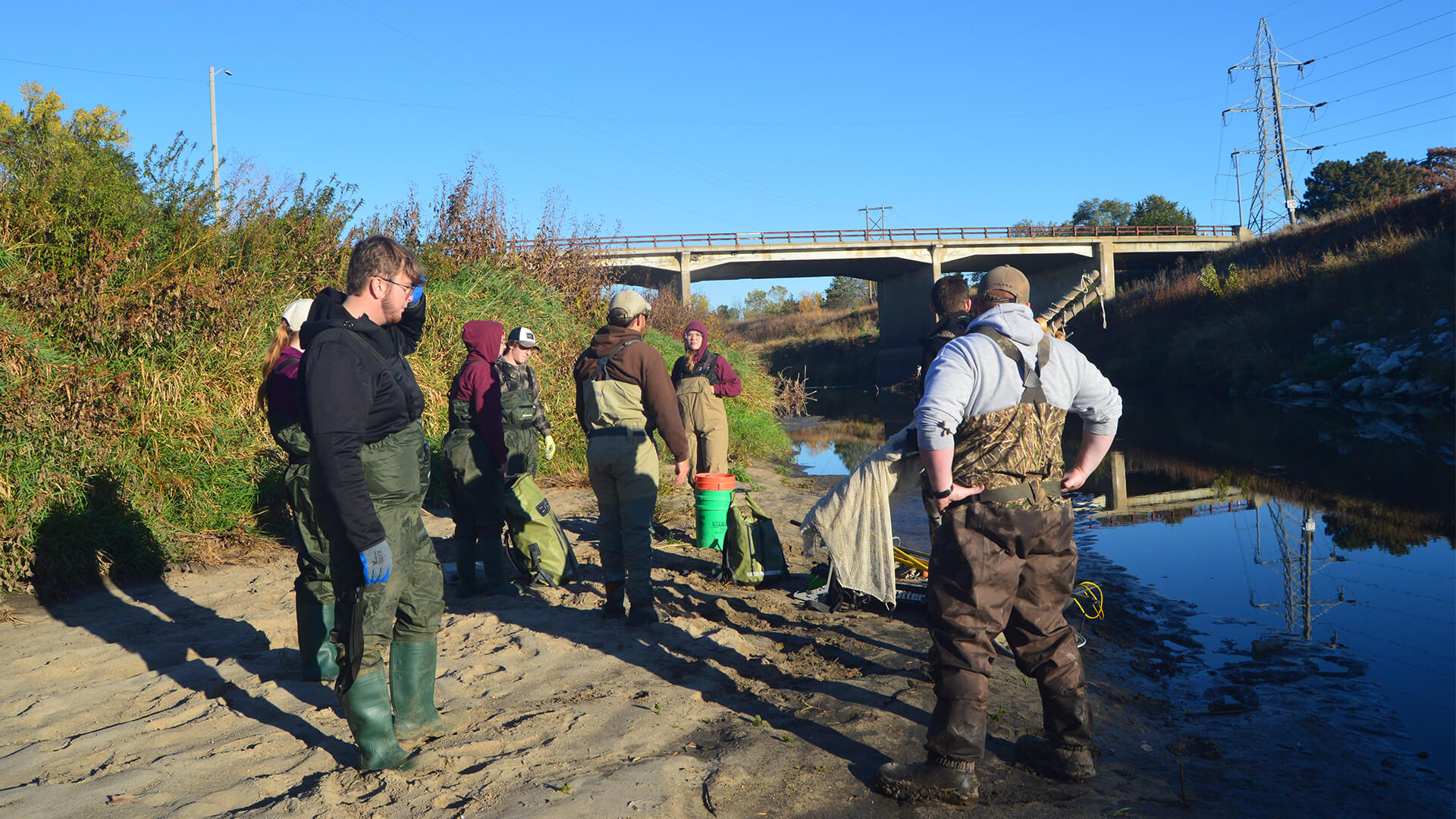
Apply your learning through classes, clubs, field experiences and workshops. Study water and soil systems, analyze the impacts of extreme weather, work with landowners on ecosystem management plans and teach others about the outdoors.
Build Professional Connections
Work alongside leading researchers in interdisciplinary programs and labs, including:
- Great Plains Cooperative Ecosystem Studies Unit,
- National Drought Mitigation Center,
- Ecohydrology and Hydrogeophysics Science Lab,
- Center for Advanced Land Management Information Technologies,
- Landscape Evolution & Luminescence Geochronology Laboratory,
- Nebraska State Climate Office
- And many others.
Notable Courses
Soil Evaluation (NRES 279)
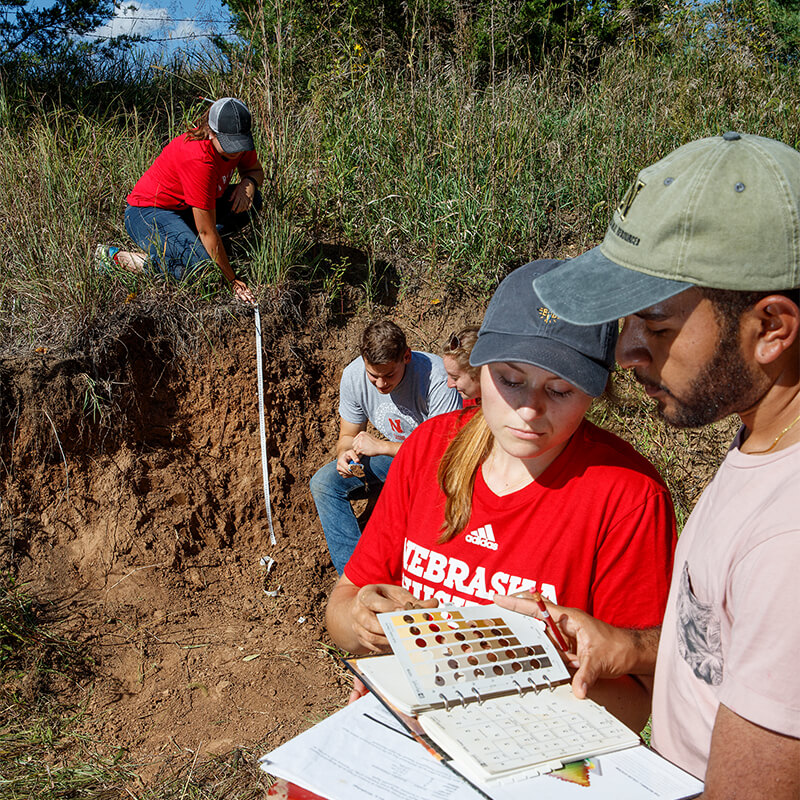
Learn fundamental knowledge of the description of soils in the field. Apply the techniques employed in writing descriptions of soil morphology.
Climate and Society (NRES 452)
Explore how climate impacts human and natural systems while developing critical perspectives on building climate resilience in diverse socio-economic and ecological systems.
Stream and River Ecology (NRES 481)
A course dedicated to understanding our streams and rivers. Learn the organisms, nutrient cycles, ecosystem services and field techniques specific to streams and rivers.
Climate Literacy in Natural Resources (NRES 208)
Understand the science of climate systems and impacts on our natural resources. Practice how to assess such information and applications to natural resources management.
Introduction to Geospatial Technologies (NRES 218)
This course provides an overview of geospatial technologies, with a focus on remote sensing, geographic information systems (GIS) and their applications to natural resources.
Wetlands (NRES 468)
Understand the scientific processes occurring in wetlands. Learn the hydrology, soils, organisms, ecology, delineation and ecotoxicology specific to the creation and sustainability of wetlands.
Huskers Do Big Things
Internships
- Environmental Health Intern, Children’s Mercy Kansas City
- Ecosystem Stoichiometry Undergraduate Lab Technician, University of Nebraska–Lincoln
- Soil Conservation Intern, Natural Resource Conservation Service
- US Geological Survey Intern
- Ecology Intern, Resource Environmental Solutions
- High Plains Regional Climate Center Intern, University of Nebraska–Lincoln
Careers
- Geographic Information Systems (GIS) Technician, Olsson
- Soil Conservationist, Natural Resource Conservation Service
- Integrated Water Management Planner, Nebraska Department of Natural Resources
- Drought Impact Specialist, Valentine National Wildlife Refuge
- Extension Educator, University of Nebraska–Lincoln
- Environmental Scientist, JEO Consulting
Graduate Schools
- M.S. and Ph.D. Soil Science, Pennsylvania State University
- M.S. Environmental Management, Duke University
- Ph.D. Environmental Science, Oregon State University
- M.S. and Ph.D. Environmental Science, University of California Riverside
- M.S. and Ph.D. Agricultural Meteorology, Iowa State University
- M.S. Climatology, University of Delaware
Outside the Classroom
The School of Natural Resources encourages students to participate in a variety of opportunities outside the classroom. Our students are built on experiences, not just lectures.
Study natural resources in diverse environments around the world. Watch sandhill cranes migrate in Nebraska, conduct research at Cedar Point, explore Kruger National Park or study ecosystems in Puerto Rico.
Join student organizations and find your community. The Soil Judging Team blends classroom learning with fieldwork and competition, challenging students to identify soil profiles and evaluate land use.
Apply for the Cabela’s Apprenticeship Program to fund hands-on experiences in conservation, research and outreach. Support internships, research projects and outreach work while gaining real-world experience.
Build strong relationships with community partners while gaining hands-on experience. Apply what you learn, explore career paths and contribute to meaningful work that supports communities in Nebraska and beyond.

Featured Faculty
Jill Motschenbacher, Associate Professor
Jill Motschenbacher is a soil scientist who studies the dynamics of agroecosystems and how past events shape modern agricultural systems. Students work with Jill to examine the inputs, processes and outputs of production systems while exploring ecological, physical and social factors that influence sustainability.
Academics & Experiential Learning
- Your Student Success Team and School of Natural Resources faculty support you in staying on track to graduate and reaching your career goals.
- Employers and industry professionals visit campus to share insights and connect with students.
Career Preparedness
- Work with community partners and natural resource professionals during class, building connections with future employers.
- Access career support, including help with job searches, resumes, cover letters and interview preparation.
Community
- Join student organizations such as the Soil and Water Resources Club, Soil Judging Team and Range Management Club.
- A dedicated Student Success Team supports your academic and personal success.
- Connect through alumni networks, partnerships and student-focused events.
Have Questions? We're Here to Help
If you have questions about the Environmental Science major or navigating the application process, contact us.
- Contact Name
- Bridget Gross
- Contact Title
- Recruitment Specialist
- Phone
-
-