Forensic Science
-
College
-
Hours Required
120 credit hours -
Minors Available
Crime Scene Investigation, Forensic Chemistry, Forensic Biology, Pre-Law
-
Areas of Focus
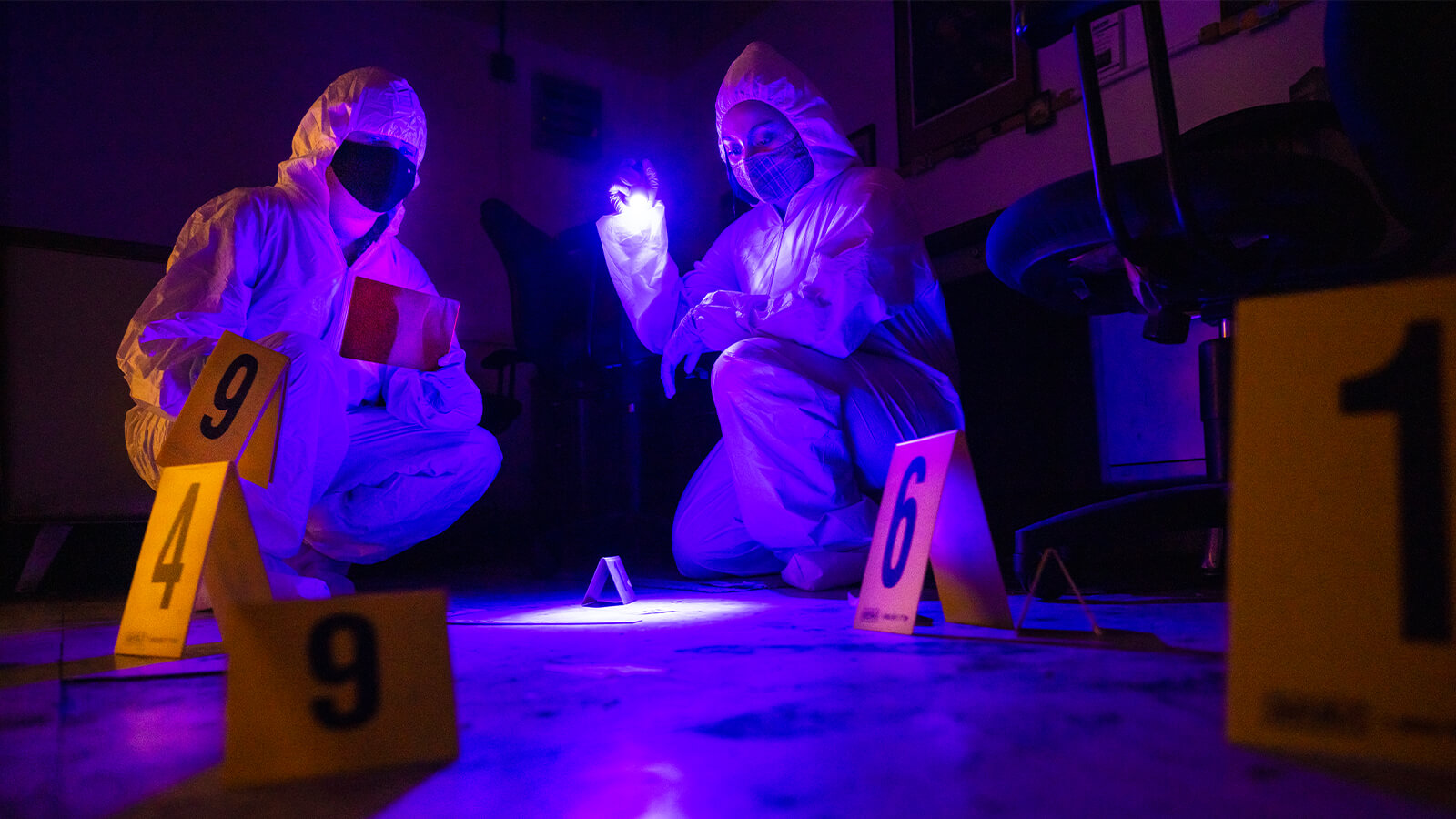
Crime Scene Investigation, Forensic Biology, Forensic Chemistry
The Nebraska Difference
Get out of the book and into the lab
Learn from experts in your field
Gain experiential hands-on learning opportunities
Tailor your education to your unique skills and interests
Program Features
Advantage
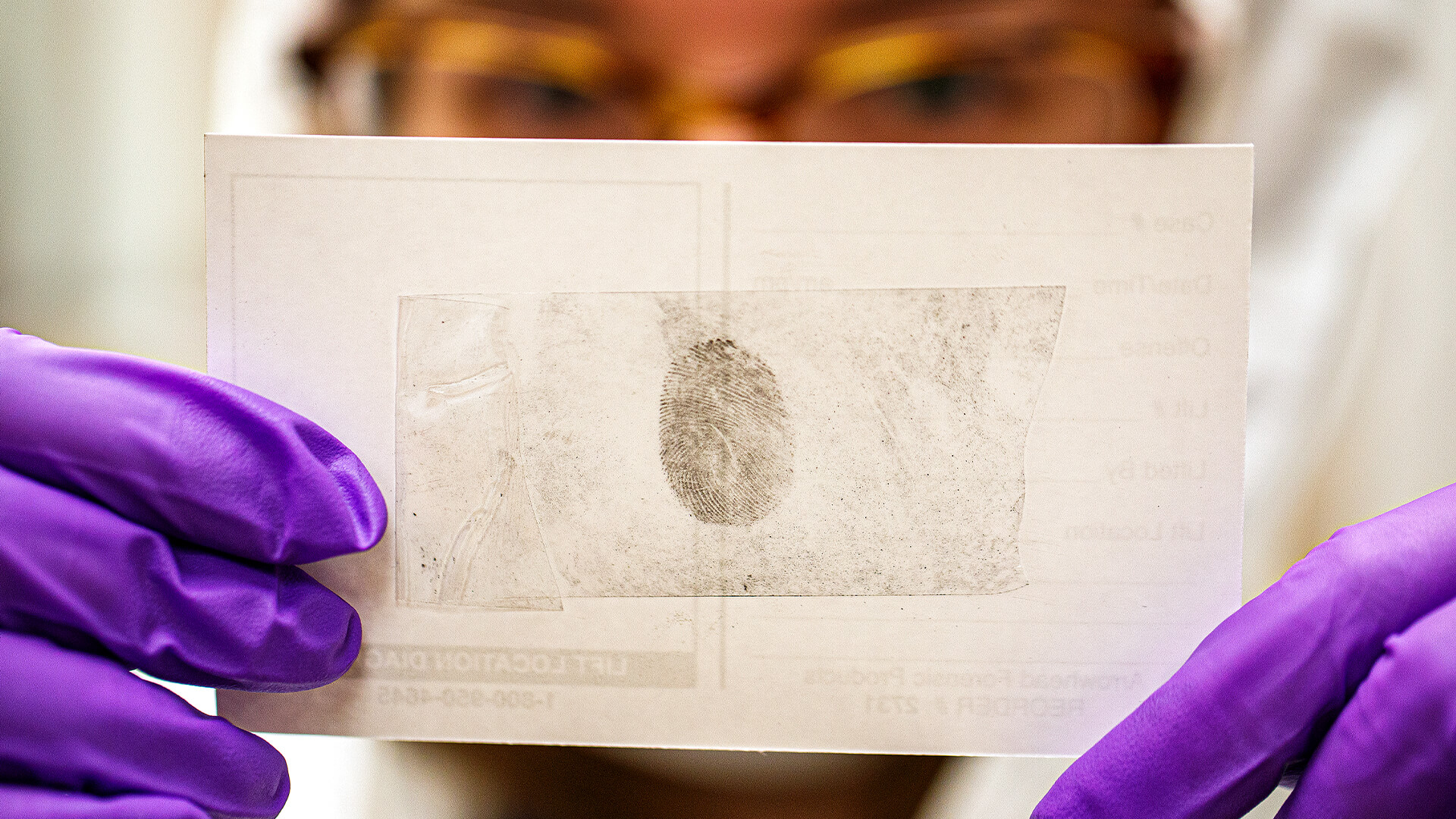
Students complete the scientific coursework required for forensic science careers while gaining additional specialized training. This combination builds a strong academic foundation and helps graduates stand out in competitive job interviews and professional settings.
Expertise
Courses are taught by faculty with real-world experience in the fields they teach. Students benefit from expert instruction, mentorship and guest speakers, gaining hands-on experience and practical insight into forensic science careers.
Options
Students can choose from three specialized tracks: crime scene investigation, forensic biology and forensic chemistry. These options provide flexibility to align with individual career goals and prepare graduates for a wide range of science-related professions.
Notable Courses
Introduction to Forensic Science (FORS 120L)
Introduction to the United States legal system, serology, DNA analysis, crime scene investigation, comparative analysis, digital forensics and behavioral sciences with a hands-on lab.
Forensic Science Seminar (FORS 200)
Discuss current issues in research, ethics and professional practice related to forensic science. Hear from guest speakers in the field.
Crime Scene Investigation (FORS 400)
Identification, collection, preservation and presentation of physical evidence. Discuss ethics and chain of custody.
Forensic Biology (FORS 401)
Ethics, quality assurance, quality control, analysis and interpretation of biological evidence for the legal system.
Forensic Toxicology (FORS 415)
Provides a comprehensive understanding of the principles of toxicology, pharmacokinetics, metabolism, analytical methods and instrumentation relative to forensic science.
Human Remains in Forensic Science (FORS 445)
Forensic anthropology within the broader context of forensic sciences and biological anthropology. Focus on estimation of biological profile and trauma assessment.
Huskers Do Big Things
Internships
- Drug lab intern, Honolulu Police Department of Scientific Investigation, Honolulu, Hawaii
- Intern, FBI, Washington D.C.
- Crime laboratory intern, Omaha Police Department, Omaha, Nebraska
- Intern, Minnesota Bureau of Criminal Apprehension, St. Paul, Minnesota
- Intern, McCrone Research Institute, Chicago, Illinois
- Intern, Tennessee Bureau of Investigation, Nashville, Tennessee
Careers
- Evidence technician, Nebraska State Patrol Crime Lab, Lincoln, Nebraska
- Forensic chemist, Nebraska State Patrol Crime Lab, Lincoln, Nebraska
- Crime scene investigator, Pima County Sheriff Department, Tucson, Arizona
- DNA analyst, South Dakota Forensic Laboratory, Pierre, South Dakota
- Latent Prints Examiner, Nebraska State Patrol Crime Lab, Lincoln, Nebraska
Graduate Schools
- M.S. Crime Scene Investigation, George Washington University
- M.S. Toxicology, Thomas Jefferson University
- M.D. College of Medicine, University of Nebraska Medical Center
- M.S. Forensic Technologies, University of New Haven
- M.S. Forensic Science, Saint Joseph’s College
- M.S. Biochemistry, University of Nebraska–Lincoln
Outside the Classroom
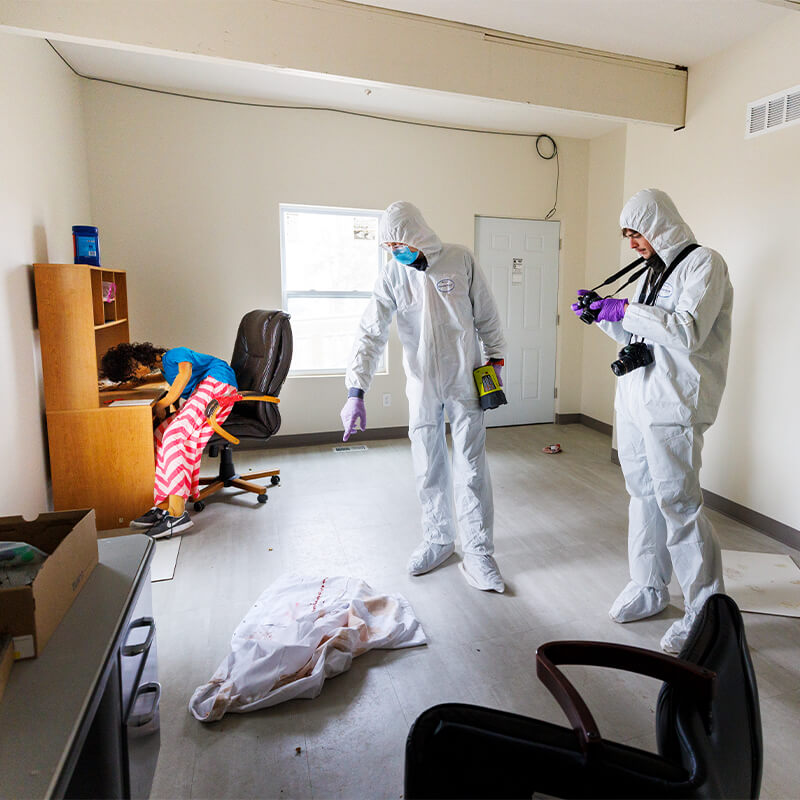
Immersive Crime Scene House
Stretch your crime scene investigation skills as you process mock crimes at the Crime Scene House on East Campus.
Open a case in the forensic science capstone course and begin investigation. Process the scene, examine evidence, conduct laboratory tests and testify in mock court.
Utilize "Death Scene Insect Succession in Nebraska: A Guidebook,” published by the entomology and forensic science departments.
Featured Faculty
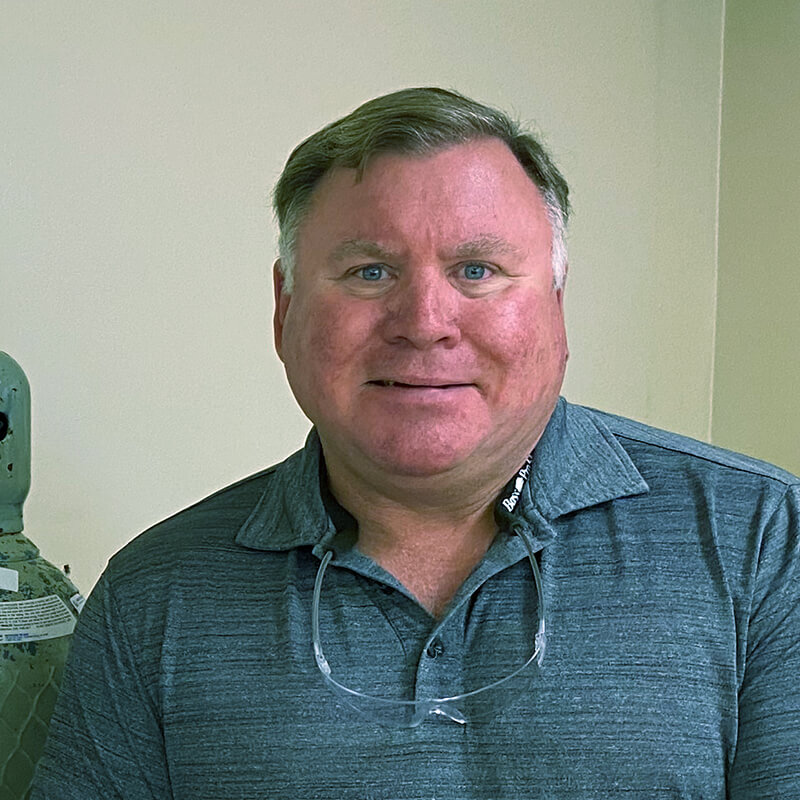
Charles Murrieta, Ph.D., Lecturer
Chuck Murrieta, Ph.D., is originally from Los Angeles, California. After his undergraduate education in Biology, Chuck moved on to complete his master's degree in molecular biology from Cal Poly San Luis Obispo. A few years later, he finished his doctoral education at the University of Wyoming studying animal nutrition and lipid biochemistry.
Academics & Experiential Learning
- The capstone class, FORS 485, features a mock crime scene at the crime house on campus and a mock trial where you must give your expert witness testimony.
- Earn credit for internships and research projects.
Career Preparedness
- Build your resume, CV and cover letters in multiple classes throughout the academic program.
- Participate in mock interviews held each spring with the Nebraska State Patrol Crime Lab.
Community
- The forensic science clubs provide the opportunity to connect with peers in the major through various activities and network with guest speakers.
- Take classes and attend events with biochemistry, microbiology and forensic science majors in the Experience the Lab Learning Community.
Have Questions? We're Here to Help
If you have questions about the Forensic Science major or navigating the application process, contact us.
- Contact Name
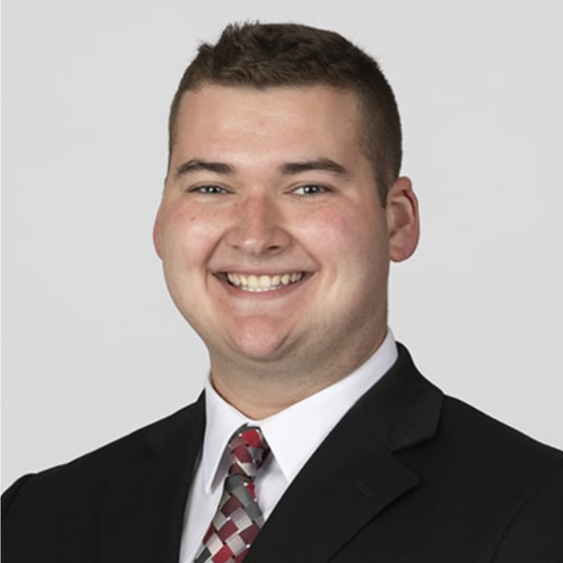
- Logan Newman
- Contact Title
- Forensic Science Academic Advisor
- Phone
-
-